
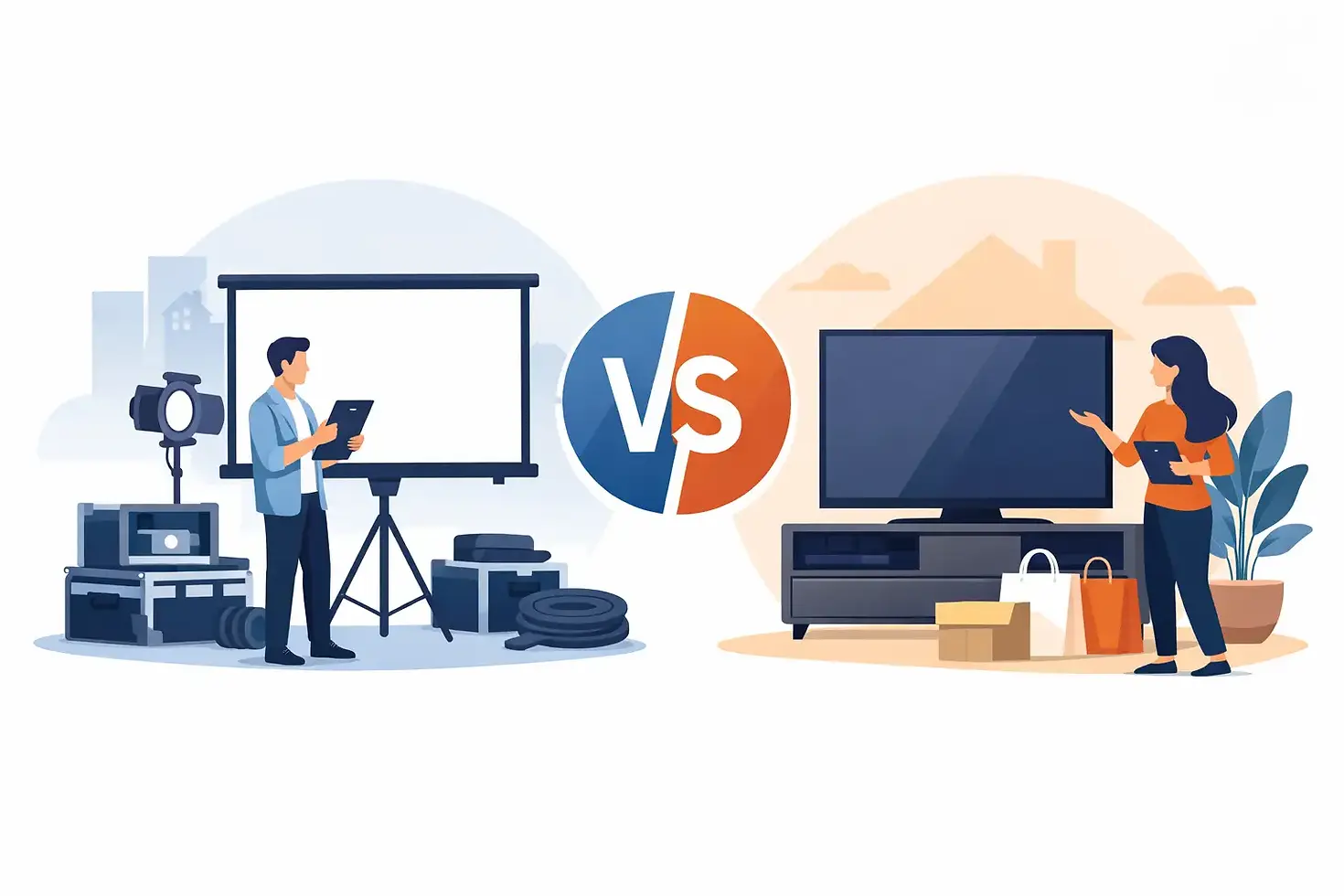
Rental Screens Versus Buying: Which Fits?

A packed auditorium, a grand opening, or a Friday night game gives you only a few seconds to earn attention. The question behind rental screens versus buying is not simply which option costs less today. It is which approach gives your organization the visibility, flexibility, and confidence to make every message count.
For a one-time event, renting an LED video wall can put a major visual moment within reach without a long-term commitment. For an organization that communicates with audiences every week, owning a display can turn that same visual impact into a dependable, always-ready asset. The right answer depends on how often you need the screen, where it will live, and what you expect it to do for your brand.
Start With the Job the Screen Must Do
Before comparing monthly payments, rental rates, or screen sizes, define the outcome. An LED display is not just equipment. It is a high-visibility communication tool that can promote specials, welcome visitors, show live video, recognize sponsors, guide guests, or build energy around a gathering.
A local retailer may need an outdoor LED sign that changes promotions throughout the day. A church may want a large indoor LED wall that supports worship, lyrics, announcements, and livestream visuals every weekend. An event producer may need a temporary display that transforms a ballroom for two days, then disappears before teardown.
Those are three different jobs. Treating them as the same purchase creates confusion and can lead to a screen that is either underused or unable to meet the moment.
When a rental makes immediate sense
Rental screens are built for occasions with a defined beginning and end. Product launches, conferences, fundraisers, festivals, touring activations, sports watch parties, commencements, and seasonal promotions are all strong rental candidates. You get the visual scale and vivid color of a professional LED display without taking on permanent storage, maintenance, or ownership responsibility after the event.
Renting is also useful when you are testing a new format. Perhaps your school is considering a large screen for graduation, or your marketing team wants to see whether a mobile LED display can increase traffic at a grand opening. A rental lets you evaluate audience response and content needs in a real-world setting before making a bigger commitment.
For many events, the biggest benefit is simplicity. A properly planned rental can include screen selection, delivery, setup, takedown, and operational support. Your team can focus on the audience rather than trying to become display technicians overnight.
When buying delivers stronger value
Buying is usually the better move when visibility is part of your regular operation. If you need a display every week, every day, or across multiple recurring campaigns, rental fees can quickly become a repeating expense without creating a long-term asset.
An owned LED screen gives you control over the schedule. Your staff can update content whenever the message changes, whether that means morning specials, an upcoming event, donor recognition, emergency information, or a new brand campaign. With software training and a clear content process, the display becomes part of how you communicate, not a special feature you bring out occasionally.
Ownership is especially compelling for permanent indoor video walls, outdoor LED signs, digital billboards, and displays installed at venues with a steady calendar. It also gives you room to build a content strategy over time. Instead of asking, "Is this message worth another rental?" your team can keep the screen active with timely, relevant visuals.
Rental Screens Versus Buying: Compare the Real Costs
The first price you see is rarely the whole story. Renting usually requires a lower upfront investment, but the total can rise based on screen size, pixel pitch, event duration, delivery distance, installation complexity, crew needs, and whether content support is included. That does not make rental a poor value. It makes it important to plan around the full event scope.
Buying requires a larger investment at the start, yet it may cost less over time for organizations with frequent use. The ownership calculation should include the display itself, mounting or structural work, electrical requirements, installation, content management, training, warranty coverage, and future service. Financing can make a permanent LED project more manageable by spreading the investment across predictable payments.
A useful way to frame the decision is through frequency. If you need a screen once or twice a year, renting may be the practical choice. If you rent several times each quarter, the math may begin to favor ownership. If the display will operate daily at your facility, buying often creates the strongest long-term return.
Still, frequency alone is not everything. A venue may own an indoor LED wall for regular use while renting additional screens for its largest annual event. A business may purchase a permanent outdoor sign while renting a mobile LED unit for an off-site promotion. The best strategy can be a mix of both.
Match the Display to the Environment
A beautiful display only performs well when it is designed for the space. Indoor and outdoor applications have different demands, and temporary versus permanent use changes the installation plan.
Indoor LED video walls are ideal for lobbies, worship spaces, auditoriums, meeting rooms, showrooms, and stages. They can create a polished presentation environment with high-resolution visuals viewed at close range. Pixel pitch matters here because viewers may be just a few feet from the screen. Fine-pitch LED panels create a sharper, more detailed image in those close-viewing applications.
Outdoor LED signage needs the brightness, weather protection, and durability to remain visible in daylight and reliable through changing conditions. A display that looks impressive at night but fades in direct sun will not deliver the attention you paid for. High-quality outdoor screens are engineered for day-and-night visibility, with color performance that helps messages stand out from the surrounding visual noise.
For rentals, access and setup are just as important as picture quality. Can the screen be brought through the venue entrance? Is there enough power? Where will viewers stand? Will it need ground support, truss, a trailer, or a mobile unit? Answering these questions early prevents last-minute compromises.
Content Can Change the Decision
Organizations sometimes focus heavily on the hardware and forget that the screen needs a steady stream of useful content. If your team has frequent announcements, promotions, video, live camera feeds, or sponsor messages, ownership provides more opportunity to put the display to work.
That does not mean every message must be complicated. Strong LED content is often simple: high-contrast graphics, short headlines, clear calls to action, and motion used with purpose. A large LED display can be exciting, but it should never make the audience work to understand the message.
Rentals can be the better choice when you have a single, high-value content moment. A branded event backdrop, keynote presentation, awards program, or live sports feed may only need a screen for a limited time. In that case, investing in temporary visual impact can be smarter than purchasing equipment that will sit idle.
If you buy, ask about software training from the beginning. The ability to update a screen quickly is where much of its value lives. A display manager should feel comfortable scheduling content, making basic changes, and knowing who to call when support is needed.
Choose a Partner, Not Just a Screen
Whether you rent or buy, dependable support matters. LED projects involve more than panels and pixels. They involve viewing distance, brightness, structural planning, power, content workflow, installation, and service after the screen turns on.
Look for a provider that asks practical questions before recommending a product. They should want to know your audience size, the space, operating hours, content plans, budget range, and long-term goals. A free mock-up can help your team picture the finished installation before committing, while a clear warranty and training plan reduce uncertainty after the project is complete.
The Pixel Man helps organizations move from an initial idea to a display solution designed around real use, whether that means a temporary event screen, a permanent LED sign, or a larger visual upgrade. That hands-on guidance is valuable because the right display is rarely chosen from a spec sheet alone.
A Decision That Should Feel Clear
Rent if the screen supports a defined event, a short campaign, or a test of a new visual strategy. Buy if the display will become a regular part of how you attract, inform, and engage people at your location. Consider a blended approach if your everyday needs are permanent but your biggest moments demand extra scale.
The goal is not to own the largest screen or rent the flashiest one. It is to put the right message in front of the right audience with enough clarity and color to make them look up, remember it, and act.


Comments