
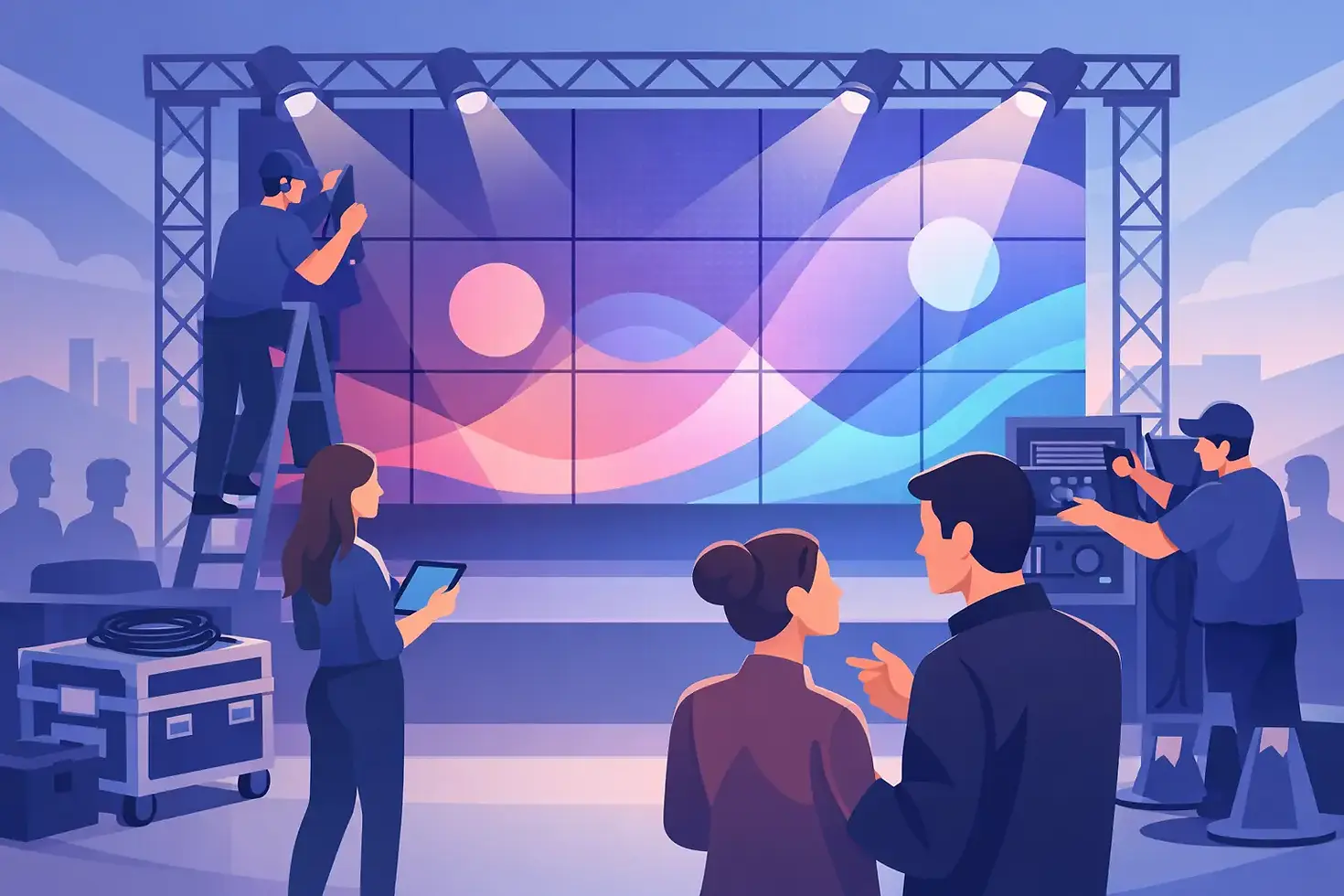
LED Wall Rental Guide for Better Events

A ballroom with dim projectors and washed-out slides feels forgettable fast. A bright, high-resolution display that fills the room changes the energy immediately. That is why an LED wall rental guide matters before you book a screen for a conference, church service, school event, trade show, concert, or outdoor promotion.
Renting an LED wall is not just about getting a bigger screen. It is about making sure your audience can actually see the message, feel the moment, and stay engaged from the first second to the last. When the screen is the visual centerpiece, small mistakes in sizing, brightness, or setup become very visible. The right rental, on the other hand, makes your content look polished and your event feel professionally produced.
What an LED wall rental really includes
Many buyers picture an LED wall as a stack of panels and not much else. In practice, a strong rental package should include far more than hardware. You are usually paying for the display panels, processing equipment, rigging or ground support, delivery, setup, testing, and teardown. In many cases, you may also need an operator or on-site technical support, especially for live events with multiple content sources.
That difference matters. A low quote can look attractive until you realize it excludes the pieces that make the wall actually work. For decision-makers who want reliability, the smartest move is to ask what is included from the start, not after the event schedule is already locked.
LED wall rental guide: start with the venue
The venue tells you almost everything about the type of screen you need. Indoor spaces usually allow for tighter pixel pitch, which means better close-up clarity. Outdoor settings demand more brightness, weather resistance, and often a larger display so the content reads from a distance.
Viewing distance is one of the biggest factors. If guests will stand a few feet from the wall at a trade show booth, you need a sharper display than you would for a festival audience watching from 50 feet away. A wall that looks great from the back of a field may look coarse in a lobby. That does not mean one option is better across the board. It means the right option depends on where the audience is and how they will experience the content.
Ceiling height, power access, stage layout, and load-in limitations also shape the decision. A historic venue with tight access doors may require a different build plan than a convention center. An outdoor church revival may need weather-ready equipment and daytime brightness that a hotel ballroom does not.
Size should match impact, not ego
Bigger is not always smarter. A wall that overwhelms the room can create sightline problems and eat up valuable stage space. Too small, and the audience strains to read text or loses interest in visual details.
The best rental size supports your message. If you are showing sermon lyrics, event branding, speaker IMAG, sponsor loops, or promotional video, each content type has different visibility needs. Text-heavy content usually benefits from careful sizing and layout choices more than raw screen area. If the wall is meant to create a dramatic visual backdrop, then scale becomes more important.
This is where mock-ups and layout planning can save money. A preview of how the wall will sit in the room often reveals whether you need a wider format, a taller center screen, or a more modest setup with better proportions.
Brightness, resolution, and pixel pitch without the jargon overload
Most renters do not need a crash course in LED engineering. You do need to know which specs affect results.
Pixel pitch is the distance between LED pixels. Lower numbers create a sharper image at closer viewing distances. For indoor events where people will be near the screen, tighter pitch is often worth the investment. For large outdoor events, a wider pitch may be perfectly effective and more budget-friendly.
Brightness is critical for outdoor use and any space with strong ambient light. If your event happens during the day, a dim display will not be rescued by good content. It will still look weak. Strong brightness and vivid color output are what give LED walls their advantage over projection in high-light environments.
Image processing also matters more than many buyers realize. Good processing helps motion look smoother, color appear more balanced, and content scale correctly. If you are using live camera feeds, presentation software, video playback, and graphics together, reliable processing is not optional.
The content plan should shape the rental
A lot of rental decisions go wrong because the screen is chosen before the content is considered. That order should be reversed. Ask what will appear on the wall, who is creating it, and how it will be delivered.
A keynote presentation has different needs than a worship service. A sponsor-heavy gala differs from a high-energy concert. Some events need one clean source. Others need switching between laptops, cameras, playback systems, and branding packages in real time.
You also want to think about aspect ratio early. Not every LED wall has to be the standard wide-screen format. Depending on your stage design or campaign goals, a custom size may create a stronger visual effect. The right rental partner should be able to guide that conversation instead of forcing every event into the same template.
Budgeting for LED wall rentals the smart way
Price is always part of the equation, but comparing quotes without comparing scope leads to bad decisions. The cheapest number on paper may not include labor, content support, rigging, or enough processing power for your show.
A better way to budget is to separate must-haves from nice-to-haves. Your must-haves usually include the right screen size, dependable brightness, professional installation, and support that keeps the event running. Nice-to-haves might include more elaborate staging, extra side screens, or advanced show control.
If the event is client-facing, donor-facing, or central to your brand, reliability has real value. One technical failure in front of a crowd can cost more than the money saved on a bargain rental. For many organizations, it makes more sense to invest in the setup that protects the experience.
Why installation and support matter as much as the screen
An LED wall can look incredible in product photos and still become a problem on event day if the setup team lacks experience. Proper installation affects safety, appearance, and performance. Panels need to align correctly. Power and signal flow need to be stable. Content has to be tested before the audience arrives.
For venues, churches, schools, and corporate teams that do not run LED systems every week, hands-on support is a major advantage. Clear communication, pre-event planning, and access to technical help reduce stress and prevent avoidable issues. That is especially valuable when schedules are tight and multiple vendors are involved.
A company that handles setup, testing, and operator support can remove a lot of friction from the process. That kind of turnkey service is often the difference between a screen rental and a smooth production experience.
LED wall rental guide questions to ask before you book
Before signing a rental agreement, ask practical questions that reveal how prepared the provider is. Ask what pixel pitch they recommend for your venue and why. Ask whether the wall is rated for indoor or outdoor use. Ask who handles setup, who handles content testing, and whether on-site support is available during the event.
You should also ask about power requirements, load-in timing, backup plans, and what happens if a panel or processor issue appears during show hours. Strong providers answer these questions clearly and confidently. If the answers are vague, the event could get complicated quickly.
If you are comparing providers, look beyond inventory size. The better partner is often the one who asks thoughtful questions about your audience, space, and content goals. That shows they are planning for success, not just trying to move equipment.
When renting makes more sense than buying
Not every organization needs to purchase a permanent LED display right away. Renting is often the smarter move for one-time events, seasonal campaigns, touring activations, pilot programs, and occasions where you want premium visual impact without a long-term commitment.
Renting also gives you a chance to test what size, format, and content approach works best before investing in ownership. For schools, churches, venue operators, and marketing teams, that real-world trial can be incredibly useful. You get clarity from actual audience response instead of guessing from a spec sheet.
For buyers who later decide to purchase, that rental experience often makes the final investment more focused and more confident. Companies like The Pixel Man build value here by pairing premium display technology with installation support, training, and practical guidance instead of leaving customers to figure it out alone.
The best LED wall rental is the one that fits your space, your audience, and your message without creating extra headaches. When the screen is chosen with purpose and backed by solid support, it does more than display content. It gives your event the kind of presence people notice right away and remember after the lights go down.


Comments