

LED Billboard Screen Review for Smart Buyers
- Nova Luna
- 4 days ago
- 6 min read

A billboard that looks great in a sales brochure can still disappoint the first time the sun hits it at 2 PM. That is why an honest led billboard screen review has to go beyond size and price. If you are choosing a display for a business, church, school, venue, or event space, the real question is simple: will it stay bright, readable, and reliable when people actually see it in the wild?
That standard matters because LED billboards are not impulse purchases. They are visibility tools, revenue tools, and in many cases the first thing people notice about your brand. A good screen can pull attention from traffic, promote changing messages, and keep your location looking current. A weak one can wash out, glitch, or turn content management into a chore your team avoids.
What actually makes an LED billboard worth buying?
The best systems do three things well. They stay visible in full daylight, they display clean color and motion, and they hold up outside without becoming a maintenance headache. Everything else, from cabinet design to control software, should support those basics.
Brightness is where many buyers either overspend or get burned. Outdoor billboard screens need enough output to compete with direct sunlight, but brightness alone is not quality. If the screen is bright but color handling is poor, reds can look harsh, skin tones can look strange, and video can feel cheap. Strong SMD LED technology usually gives a better balance of color mixing and image uniformity, which matters when your goal is a polished, premium look instead of a glowing rectangle.
Pixel pitch is another spec that gets attention for good reason. A tighter pitch creates sharper images, but it only pays off if your audience is close enough to see that added detail. For billboard-style applications viewed from the road or across large parking areas, ultra-fine pitch is not always the smartest investment. In many outdoor commercial settings, a 4 mm HD outdoor display offers a very attractive middle ground - crisp enough to impress, practical enough to scale, and strong enough for high-impact messaging.
LED billboard screen review: the specs that matter most
A serious led billboard screen review should focus less on marketing adjectives and more on real-world performance. Not every buyer needs deep engineering detail, but every buyer should understand how the core factors affect daily use.
Brightness and visibility
If your screen is going outdoors, daytime performance is non-negotiable. The display should remain readable in morning glare, midday sun, and late afternoon angles when reflections can ruin weak screens. At night, though, brightness has to be controlled properly. A screen that blasts full power after dark can look harsh and create complaints. Good systems manage both extremes well.
Resolution and viewing distance
Resolution should match the environment, not your instinct to buy the highest number available. If drivers will view the billboard from a distance, content clarity matters more than tiny pixel detail. If people will approach on foot or stand nearby, finer pitch becomes more valuable. The right screen is the one that fits how your audience actually encounters it.
Color quality and image consistency
This is where premium displays separate themselves. Strong color reproduction makes text clearer, brand colors more accurate, and video more engaging. Uniformity matters too. If one section of the screen looks slightly different from another, the whole installation feels lower quality. That may sound minor until your logo stretches across the display and suddenly looks uneven.
Weather resistance and cabinet build
An outdoor LED billboard lives a harder life than most buyers realize. Heat, rain, wind, dust, and seasonal temperature swings all test the hardware. A quality screen should be designed for outdoor duty, not adapted for it. Cabinet strength, sealing, ventilation, and service access all matter because they affect long-term uptime, not just installation day.
Software and content control
A beautiful screen is wasted if updating it feels complicated. Buyers often focus on hardware first and discover later that software is the daily experience. If marketing staff, school administrators, church teams, or event managers cannot quickly change content, the billboard loses value. Good control systems make scheduling, formatting, and basic content changes manageable without needing a specialist every time.
Where many billboard screens fall short
The most common problem is not total failure. It is underperformance in the moments that matter most. Some screens look solid with static graphics but struggle with motion. Others are bright enough but produce flat or oversaturated color. Some are easy to install but hard to maintain. Others offer a tempting low price, then cost more through downtime, support gaps, or short component life.
Another issue is mismatch. A buyer may purchase a display built for one environment and use it in another. For example, a screen selected mainly on indoor-style image expectations may not be rugged enough for outdoor billboard conditions. On the flip side, some buyers overbuy high-end specs they will never use, stretching budget without improving results.
That is why the right provider matters almost as much as the screen itself. The best outcomes usually come from a company that can guide sizing, placement, installation, software setup, and training as one connected process instead of leaving you to piece it together.
How to judge value instead of just price
A cheap billboard screen can become expensive fast. If image quality is underwhelming, your advertising impact drops. If service is slow, your display sits dark while your brand sits silent. If your team never learned the software properly, content gets stale and the screen becomes little more than a digital poster.
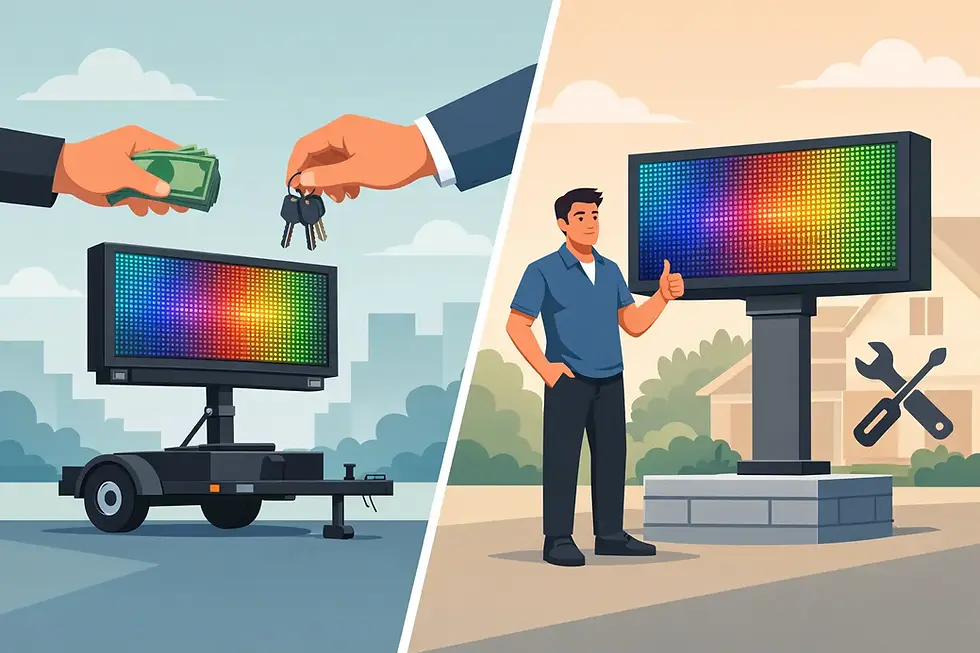
Real value comes from the full package. That includes product quality, installation expertise, support after the sale, and warranty coverage that means something when you need it. Financing can also change the equation. For many organizations, the better decision is not the lowest upfront cost. It is the option that delivers stronger performance and spreads the investment in a manageable way.
Rentals are part of that value conversation too. If you need billboard-level impact for a temporary campaign, event, festival, or special promotion, renting may make far more sense than buying. The right setup depends on how often you need the screen, how permanent the location is, and who will manage content over time.
Who gets the most from a strong LED billboard screen review?
Businesses use these reviews to avoid buying a flashy screen that does not bring people in. Schools and churches use them to balance message visibility with budget discipline. Event organizers and venue operators use them to determine whether a display can handle changing content, high traffic, and varying light conditions without creating technical stress on event day.
Local advertisers should pay especially close attention to readability. Billboard content lives or dies in seconds. If your text is too small, your color contrast is weak, or your screen lacks punch in daylight, the audience keeps driving. The best display in this category is not necessarily the one with the most advanced spec sheet. It is the one that helps your message register fast.
A practical buying lens for your final decision
Before choosing a screen, picture the exact environment. Who will view it? From how far away? In what lighting? How often will content change? Who on your team will update it? Those answers usually tell you more than a generic product comparison.
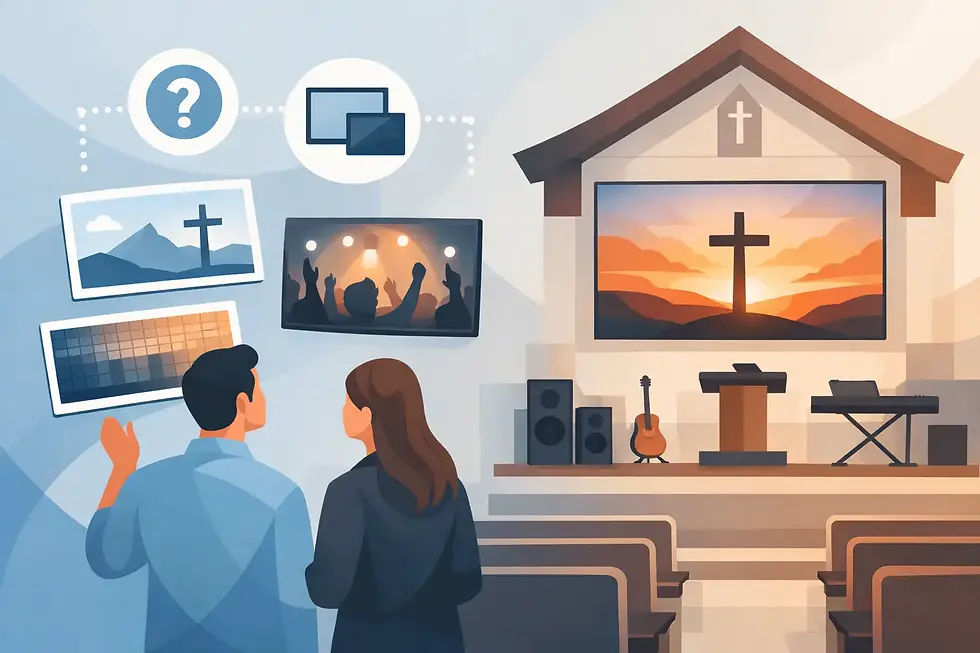
It also helps to ask what support looks like after installation. Will you get training? Is there help with setup and troubleshooting? Can the provider create a mock-up so you know what the display will look like on your site before you commit? Those services reduce risk and often separate a smooth project from a frustrating one.
For buyers who want a display that looks premium and performs like a business asset, the strongest options tend to combine high-resolution outdoor capability, dependable color performance, straightforward software, and real installation support. That is where a company like The Pixel Man stands out - not just by offering LED products, but by making the whole process easier to trust, from mock-ups to training to long-term support.
A billboard screen should do more than turn on. It should make your message harder to ignore, your location easier to notice, and your investment easier to justify every single day.

Comments